
Grief, Faith & the Making of a Saint
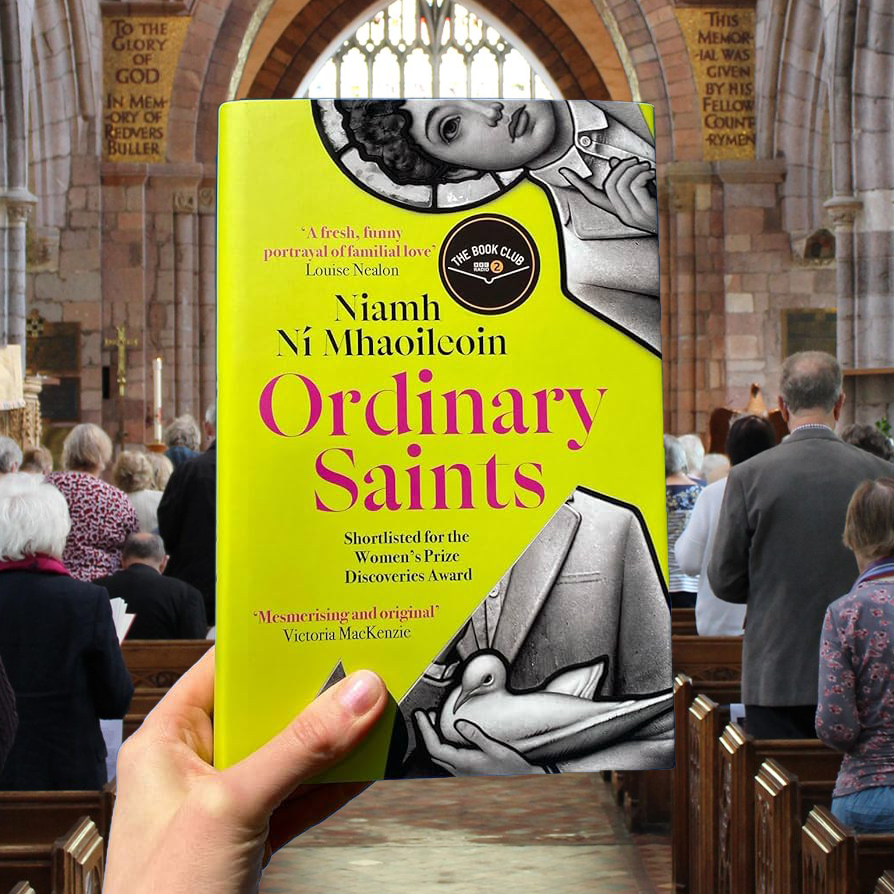
Ordinary Saints by Niamh Ni Mhaoileoin
Ordinary Saints follows Jay, who was raised in a devout Catholic household in Ireland but now lives in London surrounded by her friends and girlfriend, determined to keep the past at arm’s length. When she learns that her beloved older brother, who died in a tragic accident years earlier, is being considered for canonisation, she’s forced to confront her family, her childhood, and the complex legacy of faith that has shadowed her life. “Can you imagine it?” she jokes. “Me there in the front row in Saint Peter’s Square. The lesbian sister of a literal saint.” This sharp, self-aware humour runs through the book, softening but never undermining its emotional weight.
Ní Mhaoileoin explores the way siblings, those who are genetically closest to us in the world, can sometimes feel like total strangers. But perhaps we know them so well, that we see every tiny intricacy and every microscopic difference. Through Jay’s eyes, we see how childhood dynamics persist into adulthood, how grief reshapes memory, and how the narratives families construct can be both protective and suffocating.
The novel also examines parent–child relationships with nuance and compassion. Parents, Ní Mhaoileoin reminds us, are fallible people with their own histories and wounds. Should they share those fully with their children, being open and vulnerable, or shield and protect them? Should parents be able to bury their pasts to support their children completely? These questions reverberate throughout Jay’s reckoning with her family’s history, especially as the Church begins to shape its own version of her brother’s story.
For me, one of the most compelling aspects of the book is its nuanced portrayal of Ireland’s complex relationship with the Catholic Church. Ní Mhaoileoin conveys both the totalising power of belief and the lingering ache of departure, even for those who have been wounded. Between Jay and Brian we see the way faith and identity remain tightly interwoven long after one tries to step away.
Ní Mhaoileoin’s writing surfaces raw emotion. Inspired by her own devout upbringing, this debut is both intimate and political, interrogating who gets to decide how we are remembered, and who we become.
This review was written by book club member, Ceire Wincott. If you’d like to become a book club review writer, or if you are a publisher and would like to contact us, please email: tfbcbookreviews@gmail.com